
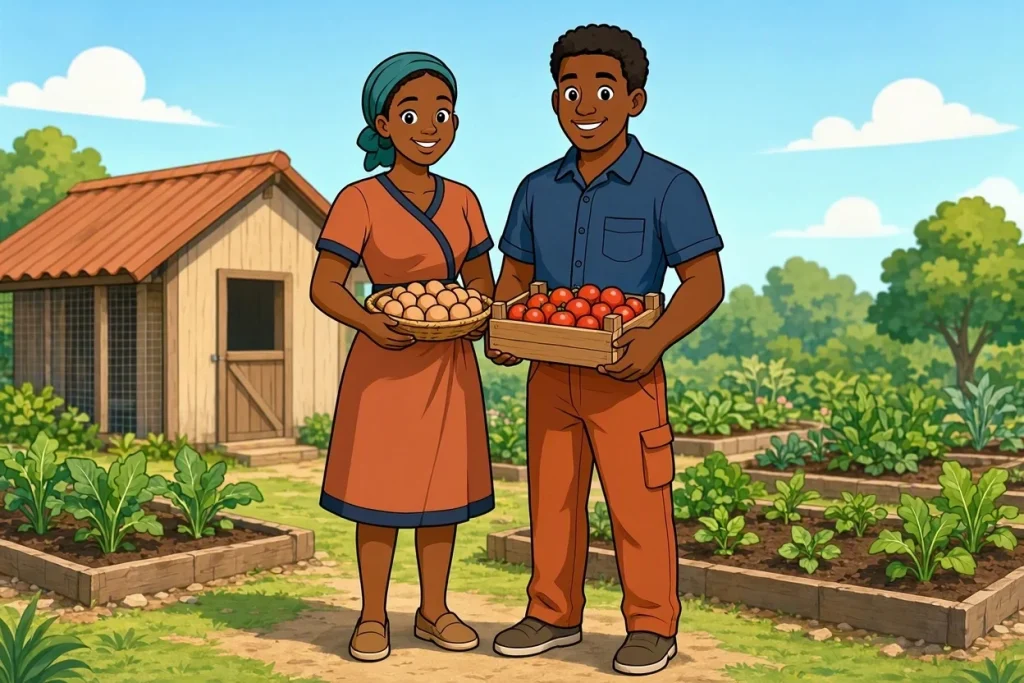
Drive out of any town in Botswana on a Friday afternoon and count the bakkies carrying trays of eggs, crates of chickens and bags of cabbage and tomatoes. Somebody grew every one of those. For the first time in a generation, the question for a young Motswana with a yard, a tap and some determination is not “will anyone buy?” — it is “can I produce properly, and can I run it as a business?” This article explains why, what the numbers look like, the mistakes that sink most first-time farmers, and how Stadira’s new course turns a backyard into an enterprise.
The bigger picture: Botswana decided to feed itself
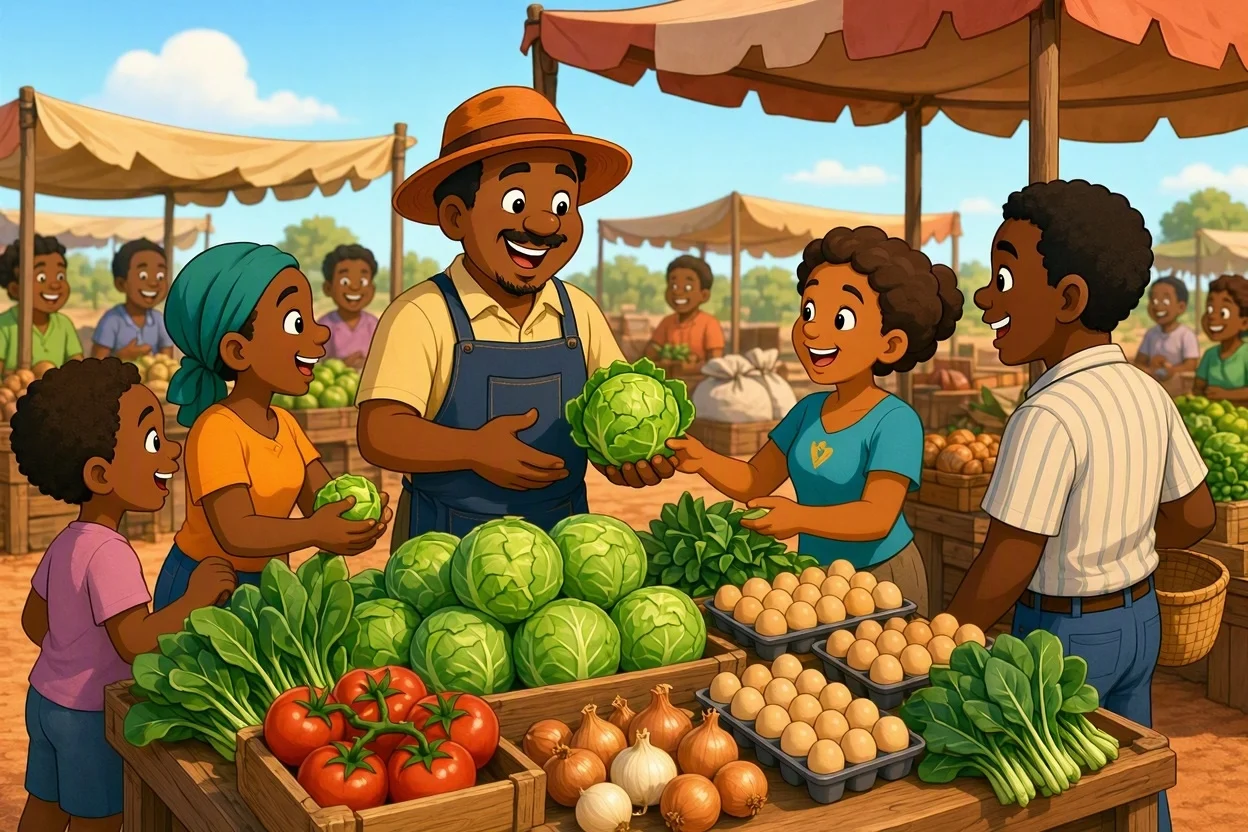
Since 2021, government has used import restrictions on selected vegetables — tomatoes, onions, cabbage, potatoes, green peppers, carrots and others — to give local growers room to supply the market. The results were dramatic. According to the Minister of Agriculture, reported by Botswana Daily News in April 2024, the horticulture import bill fell from about P634 million in 2018 to P182 million in 2023 — a 71% drop — while local production rose from 67,000 tonnes in 2021 to 86,000 tonnes in 2023. That is money that used to leave the country every week and now stays with Batswana farmers.
The policy has moved since — restrictions were relaxed in late 2024 and, as FreshPlaza reported, a temporary seasonal restriction on 16 vegetables was reintroduced in December 2025 to protect local growers from oversupply. Whatever the rules say in any given season, the direction is constant: the market wants locally grown produce, and the shops, schools, hostels and hotels that buy it want reliable local suppliers.
Poultry tells an even stronger story. In March 2026 the Acting Minister of Lands and Agriculture told Parliament that Botswana is now self-sufficient in chicken meat and table eggs, that the sector’s value doubled from P1.7 billion in 2022 to P3.5 billion in 2025, and that about 38.9 million broiler chicks are produced a year — with 35% of them allocated to small-scale producers (Botswana Daily News). Read that last figure again: more than a third of the country’s chicks are reserved for people farming at exactly the scale a first-timer starts at.
The gap is not customers — it is producers
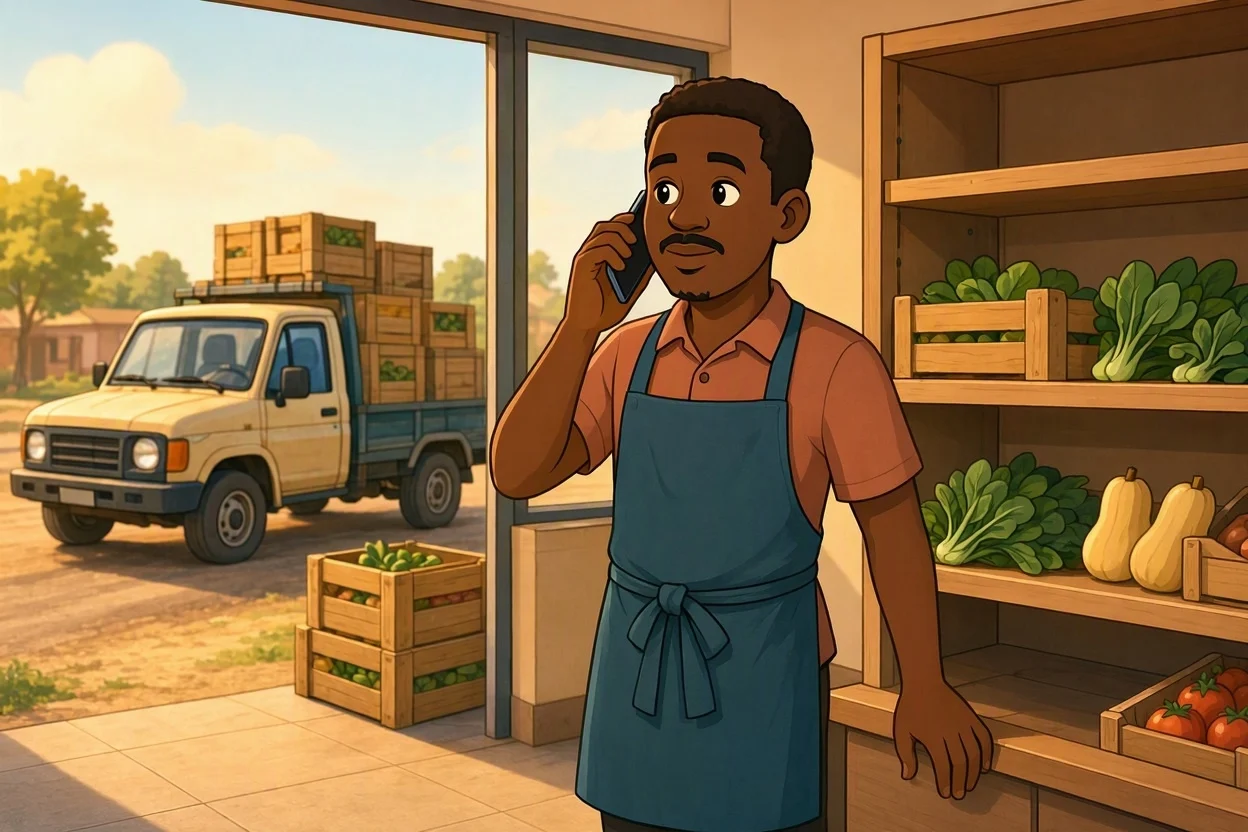
Every tuckshop, braai stand, school kitchen, hostel, lodge and butchery in Botswana needs chicken, eggs and vegetables every single week. Ask any of them what their biggest problem is and they will not say “too many suppliers”. They will say the supplier who was cheap last month has disappeared, delivered late, or brought half the order. The person who shows up on the agreed day with the agreed quantity at the agreed quality can charge a fair price and keep that customer for years.
That is why this is a business opportunity and not just a farming one. Botswana is not short of people who can raise a chicken or grow a tomato — grandmothers have done it for generations. It is short of people who can do it as a business: with a buyer lined up before the chicks arrive, a costing that tells them their break-even, records that a funder will read, and the discipline to deliver every Friday.
Hobby farm or farm business? The difference in one table
| A hobby farm | A farm business |
|---|---|
| Buys chicks first, looks for buyers later | Decides the market first, then the batch size, then the date |
| “The chickens died” | “Seven died in week two — heat stress; we fixed the ventilation” |
| Money in and out of the same pocket | Every pula recorded; farm money kept apart from household money |
| Sells whatever is left over, whenever | Delivers agreed quantities to named buyers on an agreed day |
| Hopes the next batch goes better | Compares this batch with the last one and changes one thing |
Every habit in the right-hand column can be learned. None of them needs a borehole, a tractor or a large loan. That is the whole point.
Do the numbers: a 100-broiler batch
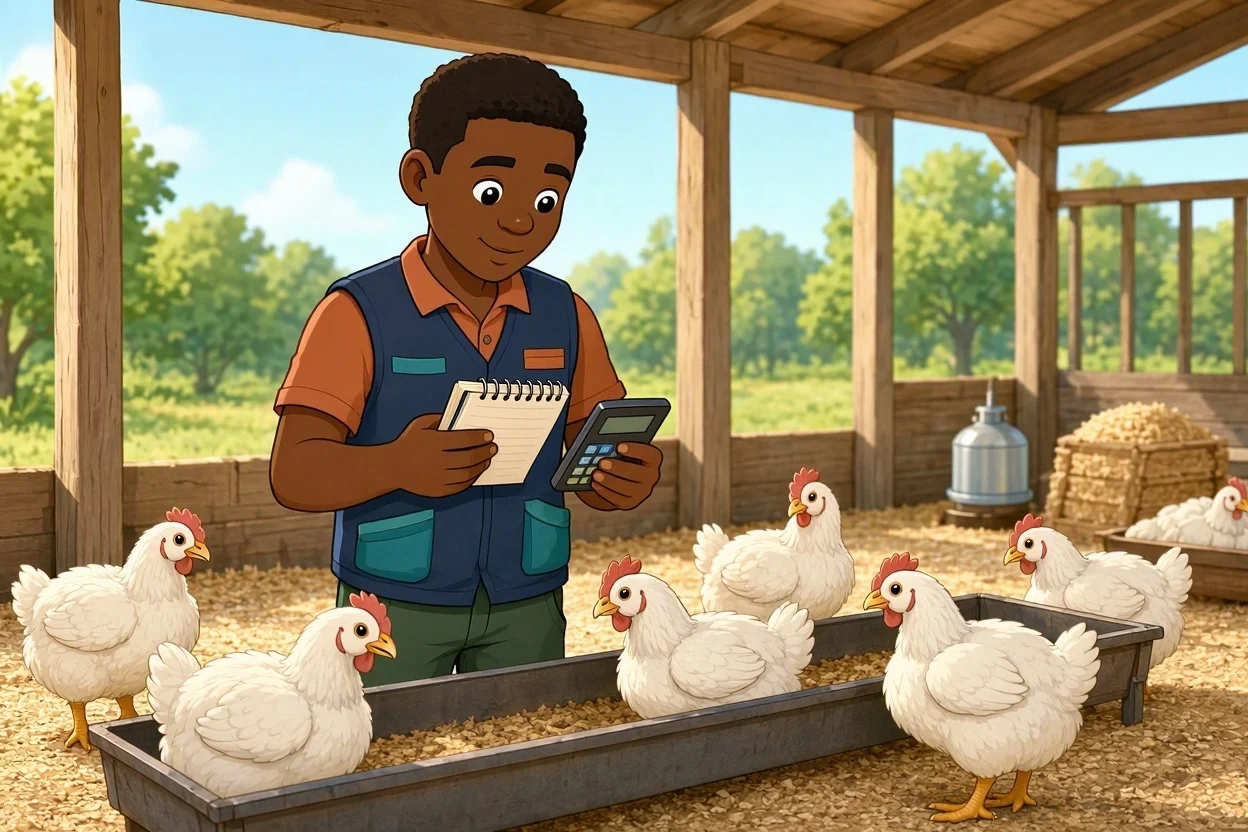
Here is the kind of costing every farmer should be able to do on the back of a feed-bag before buying a single chick. The prices are typical for a small producer buying from an agri-supply store; yours will differ, and the habit of checking them is the lesson.
- Costs: 100 day-old chicks, 8 bags of feed at about P420, vaccines and medication, wood shavings, electricity for brooding, transport — roughly P5,200 for the batch.
- Sales: allow for about 5% losses. 95 birds sold at P85 each = P8,075.
- Gross margin: P8,075 − P5,200 = P2,875 for about six weeks of work.
- Break-even: P5,200 ÷ P85 ≈ 62 birds. Sell 62 and you have covered your costs; every bird after that is profit.
Now the questions a business asks and a hobby does not: who buys 95 birds in the same week? At what price will they still buy if the supermarket drops its price? What happens to the margin if feed goes up by P40 a bag? (Answer: P320 less — still profitable, but you need to know.) Could you sell 30 of them dressed to a braai stand at a higher price? A farmer who can answer those questions on paper is the farmer a bank or CEDA officer wants to talk to.
Layers, broilers or vegetables — which one first?
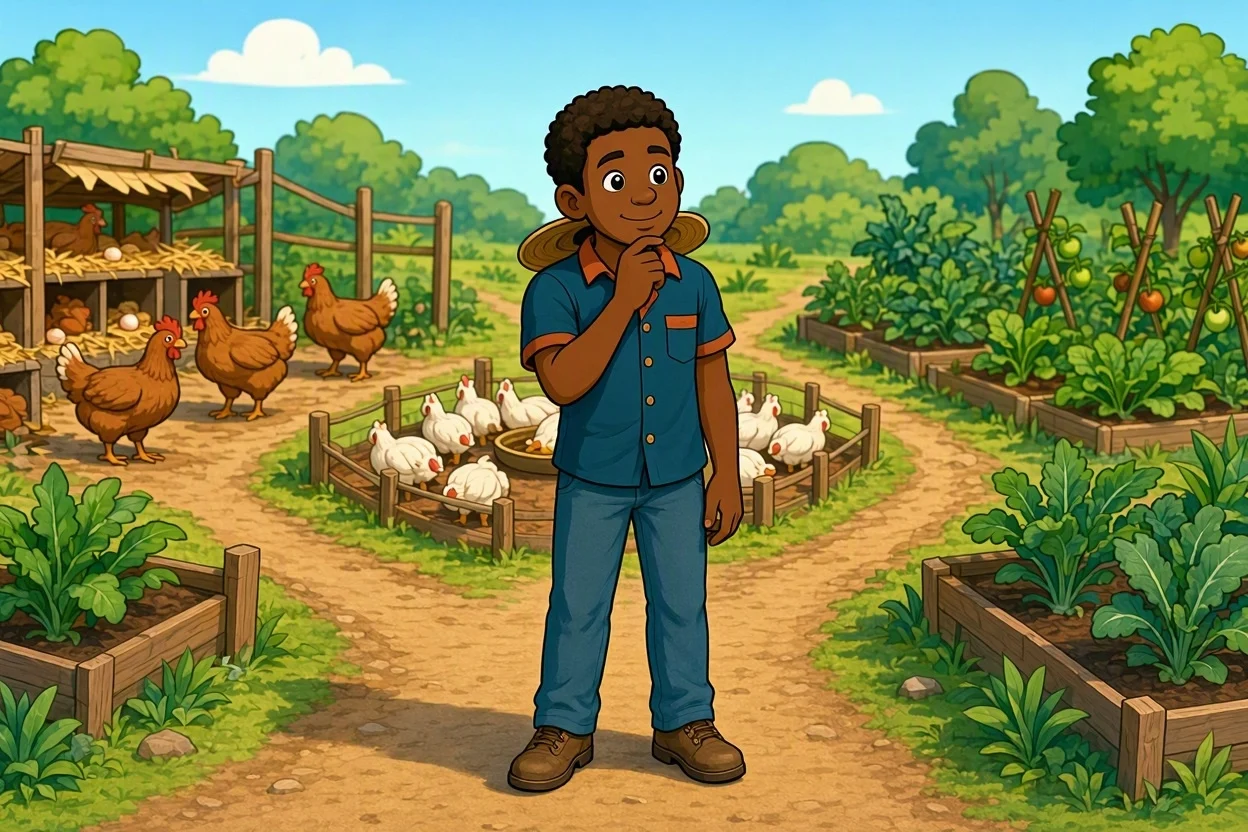
They suit different people and different pockets, and the strongest small farms in Botswana usually combine two of them.
- Broilers are the fastest money: chick to 2 kg bird in about six weeks, so a new batch every six to eight weeks. They need the tightest management — heat, water, feed and disease control every day — and a buyer ready on harvest day, because a bird that stays a week longer eats your profit.
- Layers are slower to start (around 18–20 weeks to first egg) and need a bigger up-front investment, but then they produce income every week for over a year. Eggs also keep for days, which forgives a late buyer in a way a live broiler never will.
- Vegetables need the least cash to start and the most patience with the calendar. Botswana’s year is defined by heat from October to March, frost risk in winter and unreliable rain, so the planting windows for tomatoes, cabbage, spinach, onions and green peppers are not negotiable. Water is the real constraint: a farmer with a reliable tap or tank and drip lines beats one with more land and no water.
Whichever you choose, start smaller than you want to. Fifty broilers you manage well teach you more than three hundred you lose to heat in week three — and the records from that first small batch are what funders ask to see.
Seven mistakes that close new farms
- No buyer before the chicks arrive. Sell first, then produce. A WhatsApp voice note to three tuckshops costs nothing.
- Underestimating feed. Feed is 60–70% of a broiler’s cost. Price it before you price anything else.
- Heat. Botswana summers kill birds in badly ventilated houses. Shade, airflow and water are not optional.
- No records. If you cannot say how many died and why, you cannot fix it — and no funder will believe you.
- Mixing farm money with household money. “I will pay it back on Friday” is how batches end.
- Uncontrolled credit. A tray of eggs given “until month-end” to a neighbour is a donation unless it is written down with a limit.
- Selling too late. Every extra day a broiler stays on the farm it eats, and every day a tomato waits it softens. The harvest date is a delivery date.
Registration, licences and biosecurity
Farming as a business means becoming visible to the institutions that can help you. A business name registered with CIPA, a trade licence from your local council where required, and — for poultry — working with the Department of Veterinary Services on vaccination and disease control are the basics. Biosecurity matters more than it ever did: the same ministerial statement noted that chick import permits from South Africa were refused in early 2026 because of avian influenza there. A farm that keeps visitors out of the chicken house, disinfects between batches and reports sick birds is protecting its neighbours as well as itself.
Where the money and support come from
Funders in Botswana back people who have already started something and can show the records. With even three months of a clean cash book, these doors open:
- CEDA — the Citizen Entrepreneurial Development Agency lends to citizen-owned businesses, including agriculture, on the strength of a business plan and realistic numbers.
- The Youth Development Fund, through the Ministry responsible for youth and the District Youth Offices — funding for young Batswana with a viable plan.
- LEA — the Local Enterprise Authority offers free business training, mentoring and help with plans and applications.
- Ministry of Lands and Agriculture programmes — Temo Letlotlo (which replaced ISPAAD) for crop farmers and Thuo Letlotlo for livestock, including poultry packages; applicants must be citizens aged 18 or over, keep farm records and register in the national traceability system, and each applicant is entitled to one package.
Notice what every one of them asks for: a plan, real prices, and records. Those are business skills, not farming skills — and they are exactly what most talented farmers were never taught.
What you will learn at Stadira
Poultry & Vegetable Farming as a Business is an eight-module course built for exactly this moment. It follows one farm business cycle — Plan, Prepare, Produce, Sell, Record, Improve — through the story of Kagiso, a school-leaver in Serowe who turns her grandmother’s chickens into a business with named buyers and a funder-ready plan. You will learn to:
- Choose between broilers, layers and vegetables for your site, water and cash — and size your first batch honestly
- Raise broilers from day-old chick to a 2 kg bird, run a small layer flock, and grow vegetables to Botswana’s calendar
- Cost a batch, set a price, find your break-even and keep a cash book and production records that funders trust
- Find buyers before you produce — tuckshops, hostels, butcheries, lodges — and keep them with reliable delivery
- Register, license and run a biosecure farm, and apply to CEDA, YDF, LEA and ministry programmes with the right documents
- Complete a full Farm Plan Project — enterprise, production plan, costing, market, compliance and a 90-day calendar — that doubles as your funding application
Every lesson has illustrated diagrams, a narrated video, printable notes and a Student Workbook, and the course ends with a final exam and a Stadira Certificate of Competence. It is online, so you can study from Serowe, Maun, Kasane or Gaborone — and the whole course costs a one-time fee of P895, less than the feed for a single batch of broilers.
Where it takes you

For some learners the destination is their own farm supplying three villages. For others it is a job as a farm manager, a poultry or horticulture extension assistant, an agri-supply sales rep, or a buyer for a supermarket chain that now sources locally. And for the growing number of Batswana who already farm, it is the difference between a batch that “went well, I think” and a business that can prove it — to a bank, to a buyer and to themselves.
Key takeaways
- Botswana’s vegetable import bill fell 71% (P634m → P182m, 2018–2023) while local production rose from 67,000 to 86,000 tonnes — the market wants local growers.
- The poultry sector doubled to P3.5 billion by 2025 and the country is self-sufficient in chicken and eggs; 35% of the 38.9 million chicks produced a year are reserved for small-scale producers.
- The gap is producers who can deliver reliably, not customers.
- A 100-broiler batch costing about P5,200 breaks even at about 62 birds — but only if you have a buyer, a costing and records.
- CEDA, YDF, LEA and the ministry’s Letlotlo programmes fund people who can show a plan and a clean cash book.
Sources & further reading
We believe students deserve to see where our claims come from. Figures are as published by these sources at the time of writing (September 2026) — explore the data yourself:
- Botswana Daily News — “Vegetable import ban win for farmers” (April 2024): import bill and production figures
- Botswana Daily News — poultry sector value doubles as Botswana attains self-sufficiency (March 2026)
- FreshPlaza — Botswana introduces seasonal restriction on 16 vegetable imports (December 2025)
- Ministry of Lands and Agriculture — Thuo Letlotlo programme details
- CEDA · LEA · CIPA
Ready to take the first step? Explore our courses, message us on WhatsApp, or email [email protected]. Stadira Training Institute, Gaborone.